
El Paso City Council Adopts Data Center Policy Framework With Residential Buffers and Oversight Rules |
El Paso City Council unanimously adopted a Data Center Policy Framework on July 20, 2026, setting new rules for any future hyperscale data center built within city limits. The framework requires a 300-foot buffer from residential neighborhoods, a special-use permit with City Council oversight, and a pause on tax incentives in favor of community benefit agreements. |
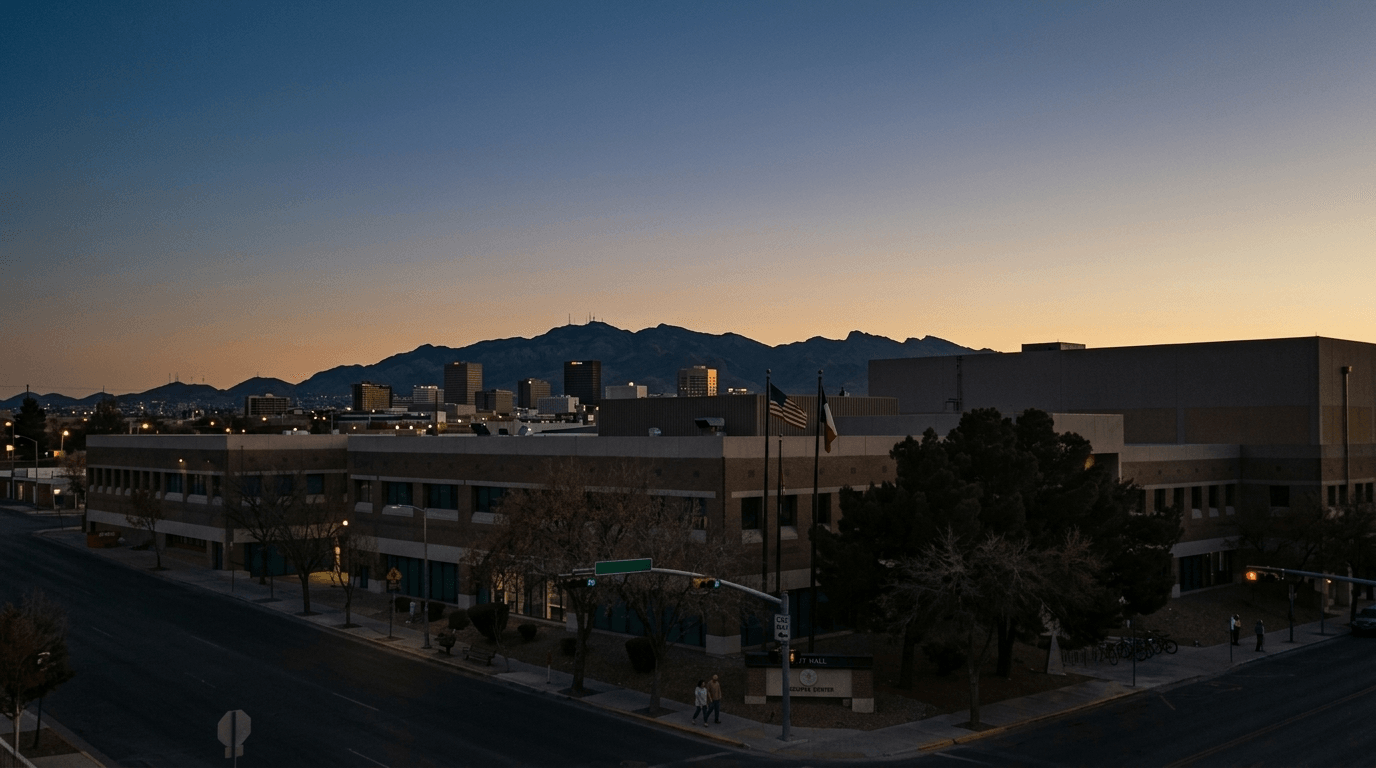
On July 20, 2026, something happened at El Paso City Hall that had been building for years. The City Council voted unanimously to adopt the El Paso Data Center Policy Framework that places clear boundaries around any future hyperscale data center built inside the city. The vote was unanimous. The community opposition that led to it was not subtle, and understanding what the policy actually does, and what it does not do, matters for any El Paso resident trying to follow this story.
What the Policy Requires
The new framework does not ban data centers in El Paso. What it does is end the era of quiet approvals. Any future hyperscale facility must now obtain a special-use permit, which requires public disclosure and direct City Council oversight. The days of a deal being structured without a public vote are over, at least for new projects.
The policy also sets physical standards: a minimum 300-foot buffer between any data center and a residential neighborhood or ecological site, a 100-foot setback from the property line, a 30-foot landscaping buffer, and enclosed equipment to manage noise. Developers must submit detailed plans covering projected water use, energy consumption, emissions, and noise mitigation, and they must use the most efficient cooling technologies available to limit water consumption.
Perhaps most significant for residents who watched the previous deal unfold: the framework pauses all new tax incentives for AI data centers and prioritizes community benefit agreements instead. Those agreements would require legally binding developer commitments to fund community projects, workforce education, or neighborhood programs before a permit is granted.
The Background That Shapes the Debate
The framework did not emerge from nowhere. In 2023, the city entered a Chapter 380 economic development agreement with Meta for a $10 billion data center in Northeast El Paso. That deal included an 80% break on city and county taxes for 35 years and a $12.5 million city subsidy to pay for road repairs around the 1,000-acre site, with no advance public vote. The transparency and community-impact concerns that followed drove months of organized opposition centered on water consumption, air pollution, and accountability.
There are two ways to read what happened at council on July 20. One view is that the city heard its residents and responded with real policy teeth, trading future tax revenue for community voice. The other view is that the policy arrived after the largest deal was already done, and the new rules explicitly do not apply to the Meta facility under construction, to data centers in El Paso County outside city limits, or to the proposed Fort Bliss data center on federal property. Both things are true.
What It Means for El Paso Neighborhoods
For families living near potential development sites, the new framework changes the practical question from whether a facility can be built to what conditions must be met before it can be approved. A public City Council vote is now part of that process. That is a meaningful shift in how decisions affecting residential neighborhoods get made in the Sun City.
Applications submitted before July 1, 2026, proceed under the old rules. Applications submitted after July 1, 2026, are subject to the new framework. El Paso residents watching future development proposals should know that distinction when tracking what comes next.
Visit El Paso Matters' coverage of the policy vote for the full council discussion and the specific language adopted, and check out the El Paso Matters homepage for ongoing reporting on how the framework develops in practice. |
17 Comments
Join the conversation
Does this mean smaller data centers are also covered, or just the giant hyperscale ones?
i like the idea of community agreements. Put it in writing before they build anything.
living near n. El paso, i saw how big that meta project is. This policy probably too late for us.
city should push for even more from these developers. Jobs, scholarships, something lasting.
sad it took organized opposition to get basic info out of the city. But better late than never.
the landscaping buffer is smart. El paso needs more green around these industrial things.
hope they enforce the rules. Sometimes things just get waved through anyway.
public votes should’ve always been required for big development stuff. Nice to see new transparency.
it’s progress, but why do old applications get a free pass? Loophole?
I remember the city council meeting when folks showed up with water jugs. Glad they listened, at least a little.
all these tech centers and we still have neighborhoods with broken roads. Hopefully community benefits fix that.
anyone know if the fort bliss center will impact schools nearby?
finally, no more secret tax breaks. El paso’s money should stay here.
300 foot buffer is decent but is it enough for noise? Those things can be loud.
wish these rules would’ve applied to the meta center. That water use still worries me.
sounds good on paper, but the big deals already slipped through. Hope the new rules actually work.
glad they are finally making these deals public. That meta one was way too secret.